
Who Can Be Held Responsible After a Truck Accident

The worst thing you can imagine has happened: you were involved in a terrifying truck accident. The days and weeks following the incident may be overwhelming as you try to come to navigate the unique complexities of pursuing justice after a truck accident and heal from your physical and emotional wounds. While your focus should be on the latter, it’s also important that the parties responsible for the accident are brought to justice. To ensure that happens, work with My 25% Lawyer.
When injured people approach us to pursue a truck accident lawsuit or claim, we put in the grunt work. Under our watch, whoever was negligent or failed to exercise reasonable care will be held accountable to the fullest extent of the law, whether one party or multiple.
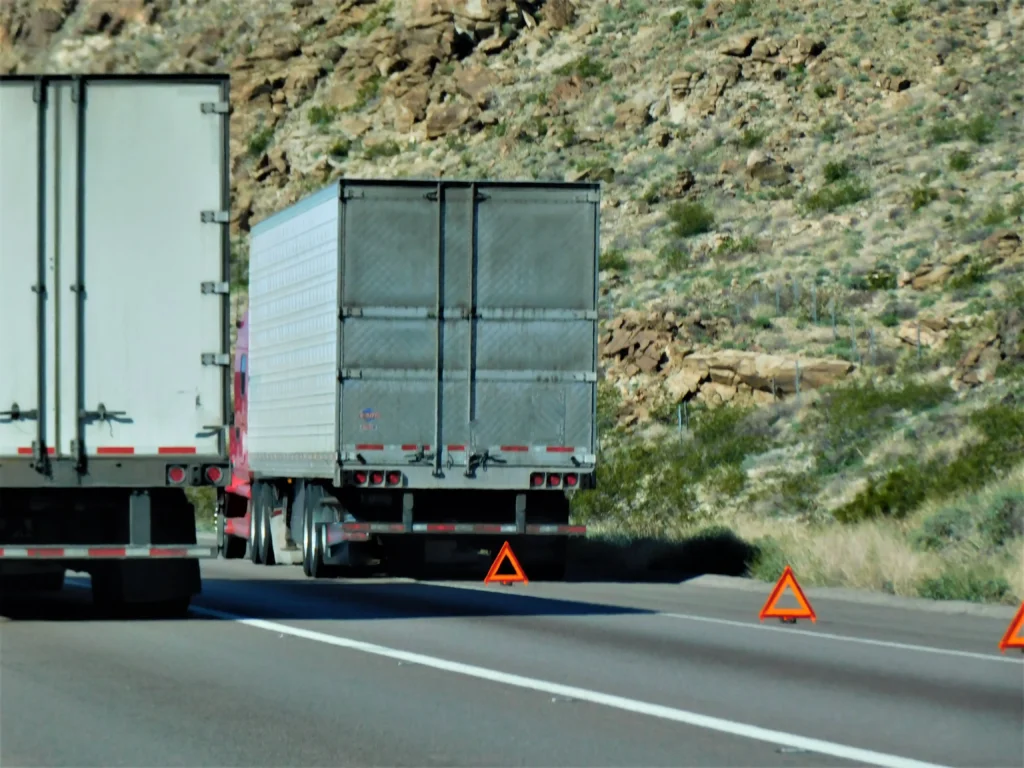
Potentially Liable Parties
Due to the multitude of factors involved, truck accident cases are highly complex. Multiple people and/or entities may be involved, ranging from the driver and trucking company to the manufacturer, vendors, or even the local government. This complexity highlights the crucial need for legal assistance.
The Driver
Though truck drivers aren’t always at fault, their behavior at the time of the accident is often the entry point to investigation. According to the Federal Motor Carrier Safety Administration (FMCSA), drivers must adhere to strict rules regarding hours of service, which limit how long they can drive without resting. Violations of these regulations include fatigued driving, the leading cause of trucking accidents. Other violations that could lead to accidents include speeding, driving under the influence, and distracted driving.
The Truck Company
After the individual driver, the trucking company will be considered in terms of liability. Like drivers, companies have a list of rules they must follow. If they don’t, they can be held legally responsible for accidents caused by their negligence. For example, if they hire drivers who lack proper training and licensure, they will be at fault. If their trucks are not inspected properly when they should be and maintenance falls behind, they will be at fault. There are many other ways a trucking company could also be liable for resulting accidents.
The Manufacturer
After the driver and company, the manufacturers will be investigated. If the driver and trucking company aren’t responsible, faulty parts may be the problem. Malfunctions with the brakes or wheels contributed to the crash; it then becomes the manufacturer’s duty to pay compensation. Proving this party’s liability usually involves showing that the defect existed and that it directly caused the accident.
The Vendors
A vendor — also known as a supplier — may cause the incident, but this will depend on the size of the trucking company and whether it has outsourced its work. This work could include driver recruitment, background checks, and alcohol and drug tests. The vendor could also be involved if it performed truck maintenance, repair and dispatch work, or other truck fleet operations. In trucking, vendors may include companies that offer freight transportation, logistics support, or delivery assistance.
The Government
Finally, the government may be liable for the accident if it failed to properly maintain its roads. Soft shoulders, sinkholes, and broken pavement can all contribute to trucking accidents if they occur on the stretch of highway that the local or state government is responsible for maintaining. A negligent government worker who failed to address the problem, or who caused it, may be held accountable.
How to Prove Fault
So, are truck drivers responsible for damages? Yes and no. They certainly can be if they’re found to be at fault for your accident, but they may not always be the ones responsible. How exactly is fault proven in trucking accidents? Our attorneys take several steps to determine fault, including examining documentation, data, and more, such as evidence collected at the crash scene, police reports, and the truck’s “black box” event data recorder. Here is the process we follow when we take on a case:
Step 1: Activity Logs
Each trucker must document their time behind the wheel and at rest. The trucking company is required to keep additional records, which we will obtain to help build your case, along with statements from witnesses and employees of the trucking company.
Step 2: Reports
Almost every accident requires police presence and a report. We’ll collect it along with statements from the responding officers to ensure that even the smallest details aren’t missed. They may have noticed that the truck driver seemed impaired, which could mean they are responsible for your injuries.
Step 3: Security Footage and Photos
We’ll also gather security footage and any other documentation of the scene that may have been taken, such as photographs. Nearby traffic or security cameras could very well have captured the accident and the driver’s actions. Photos taken of the scene allow us to better understand how the crash occurred and help investigators identify who may be responsible.
Step 4: Witness Statements
Finally, we’ll gather eyewitness statements. Witnesses play a vital role in explaining how the accident occured and proving that you were not responsible. Like the footage, they may have observed how the truck driver acted immediately before the crash.
My 25% Lawyer. Providing Representation and Winning Compensation.
If you’ve been involved in a truck accident, you need a legal team you can rely on to build your case and win fair compensation. At My 25% Lawyer, we are committed to fighting for your best interests. We have the resources necessary to investigate your case to the utmost degree and will bring unshakeable claims against those responsible.
To learn more about our services, call today and schedule a free consultation.
